
|
Was Homer Wrong?
Interesting thread over at Iseek....
Here's the last post on page 15: "After much effort I think it is safe to say that the centrifugal powered swing and endless belt have been laid to rest. Next target is the red herring of swinging v hitting. That one will take a long time to die. This discussion has a long way to go yet! The eventual target? A sound basis for interested golfers to understand what actually happens in a golf swing. By stripping away the misconceptions from TGM theory we should discover the truths it holds. That's not too much to ask is it?" http://www.iseekgolf.com/forums/inde...#ent ry213596 |
Quote:
People should study to understand prior to giving critique towards anything.... |
Word.
There's like 15 pages of this debate on iseek... I was into it but am not too into it anymore. |
http://www.iseekgolf.com/forums/inde...&gopid=213692&
Just told them off... Sorry, I am not usually like this, but I think enough is enough. Who gives a dang about semantics if the idea conveyed works??? I don't mind being called a Slinger, Whinger, Pinger, Plonker, whatever as long as I am carrying the darned thing 300. |
Quote:
Very few people from Oz have the Book and fewer have access to qualified AI instructors. If some of them want to cut their own way through the Forest then let them. Wish them luck and ask to see their work following publication. Golf history is a history of individual effort. Most that have improved on their own, create their own theories and boast their way (their Pattern) as THE Way. Some have become Great Golfers. But don't be misled: When you can't see the forest through the trees it's an effort born with setbacks and hardship, and lasts all men their lifetimes. Our efforts to improve are founded on the Three Imperatives of TGM; a promising beginning. So get yourself a pair of 3X reading glasses because that's what you'll need when Vman publishes his Work. It may be a nice addition to the Collection. |
Quote:
|
I think it's important that the stuff in TGM is right...
However small a detail.....however little (or NOT AT ALL even) it will help people play better.... Might as well. Dunno exactly where they're at in this discussion....the posts started getting really long and complex....terms....physics.....equations...etc. ... Comdpa man... They may be trying to discredit (fix?) a small small part of TGM.... Dunno if it has a motive behind it.....I don't think so.....a few of these guys are into TGM for the most part.... Don't worry.... They couldn't take away from TGM much if they tried anyway. |
Interesting Title to this Post...
To be honest, trying to get through 16 pages and understand the positions/arguement, well that is more than I am up for. So I asked for a summary, probably won't get it but we will see. Just an observation, over the years that I have been visiting TGM related forums, there are those who will say the Homer got everything right. They will toss out that it has been reviewed by engineers and scientists. Unfortunately I have never met anyone who has these reviews and I have requested them. Homer did 7 editions, and there have been changes. Was what was changed for the better? Was it to correct something? I don't have all the editions so I can't say. Then we do have those who have at best done a cursory read and do not a complete understanding and will argue that it is full of errors. It would really be nice to have Homer here to ask a few questions. He did have one problem, he often thought things were so obvious that they didn't need to be addressed, I heard some of his changes he made in later editions were to correct this oversight, not that the material was incorrect, just not obvious to everyone. |
Tgm
Mr. Kelley, for the most part, invented his own golf language. Much of the golf world now uses his terms, probably without knowing where they came from... LAG, LOADING, THROWAWAY, HITTERS vs. SWINGERS, ETC..
He worked on TGM for over 40 years, and was still working on it at the end. There probably is MORE that can be learned, but Mr. Kelley gave it quite an effort. |
These discussions will continue for a long time. The more I read and the more I'm taught the components, then the better I swing and play. There is more to HK than a lifetime can apply, and there is more to Golf than a single book can describe. I'm happy with the path that I've chosen and my knowledge of the Golf swing that I've acquired from HK and this forum and its members and other TGM people. The progress is slow but sure and I believe I've chosen correctly. The sound of ball compression and lower scores are proof enough for me. But, there is a place for doubt and re-evaluation, but after all of that, I'm still here.
|
Quote:
Sources of power in the golf swing (focussed on the club) 1. early in the downswing -- leverage through "locked" wrists 2. mid-downswing to impact -- the slingshot (or flail) effect together with leverage applied through the hands. TGM 1. The most comprehensive theory on swinging a golf club 2. Contains some misconceptions which detract from the frequent claims that it is based in physics but do not detract from its usefulness as a teaching tool (eg centrifugal force, endless belt effect, swinger v hitter dichotomy) 3. Suffers from non-standard use of terms which make for confusing discussions (vertical is the worst in this regard) Centrifugal force 1. One of the worst understood concepts in physics 2. Not a source of power in any context For the record Martee's response to my summary would enable me to write something much better in the "sources of power" section if asked for a summary now. Quote:
I hope you felt better afterwords and earned a few brownie points here following your boast. I'll consider myself told, but you do realise you were told off by one of the moderators at ISG for your post don't you? You were well out of order. Your rant won't stop me from explaining why centrifugal force does not cause the "throw out effect", or why the endless belt model is bogus, or explaining why one or two of the definitions in the little yellow book are complete gobbledegook, or continuing to explore the hitter/swinger issue (ok red herring is a bit strong). As I say on ISG, let's suppose that there are a few problems with the words of Mr Kelley. Will knowledge of those flaws put TGM on firmer or shakier ground? Quote:
attempt to discredit TGM. I just think it would be better if the high priests of TGM didn't have to paper over the theoretical cracks quite as much. Surely anybody who knows both physics and wants a bright future for TGM is embarassed by the centrifugal force thing. There's no need to feel threatened. We come in peace! :) :) :) :) :) :) |
Whirling Rocks And Clubheads
Quote:
In fact, in our 1982 GSEM Class, he mocked his accusers in a purposely-pained voice: "There is no centrifugal force, son!" Nevertheless, the concept as he defined it in the Glossary -- "The effort of the Swinging Clubhead to pull the Primary Lever Assembly (Left Arm and Club) into a straight line" -- is the essence of the Physics of Rotation. As any kid who has ever whirled a rock on a string could tell us. And that is the important thing. |
What would you call the equal and opposite force of Centrepetal Force...a "center fleeing" force of no known name?...I like the mystery of it..."The Unknown Force"..or better yet .... Let the "Unknown Force" be with you!!! Tee hee hee!!!
|
Quote:
1. Say something your opponent didn't say 2. Tell everybody how wrong it is. 3. Draw the conclusion that your position must be correct. For example 1. I heard <subject of ridicule> say that 2 + 2 = 7 2. We all know how silly that is. 3. Therefore 2 + 2 = 6 In the rock on the string example the rock is affected by only one force. That is centripetal force and it is what causes the rock to follow a circular path. As a result of the string pulling on the rock, the rock pulls on the string with an equal and opposite force. That is the centrifugal force. Going further, the boy pulls on the string (centripetal) and the string pulls on the boy (centrifugal). To balance the pull from the string, the boy leans back ever so slightly and uses gravity to balance himself. Too easy, but so many teachers, students, professors, NASA educationalists and so on get it wrong. There most certainly is a centrifugal force at work, but it does not act on the stone. Mock away, but Homer got it wrong. So did the flat earth theorists. Before anybody asks, the "throw out effect" is real. It just has nothing to do with centrifugal force. And that is the important thing! Do you want to do the endless belt now, or chew on this one for a while? |
Golf Sceptic,
You've said what you wanted to say. This is not my website but by the amount of and tone of your posts, you may have come looking for disagreement and argument. This forum is friendly and accommodating. People are drawn to this forum who find the information insightful and useful. If you've read the book and have a question, then members will respond the best they can. If you have a problem with your golf swing then the members will also step-up-to-the-plate, and help you the best they can. This is all we can possibly do for each other. If you want to debate physics and Centrifugal Force, then perhaps you would be better accommodated on a Physics Forum. There you may find people with your like interests and knowledge and share insight into that subject. You may be happier somewhere else, however with your knowledge of physics you could become a helpful member here. Just remember that we don't 'burn bridges' here, so you may have to 'bite your tongue' once-in-awhile. Good luck Down Under. |
Agree with D above
This is not the place for heated arguments. There are many other forums to go to for that so be civil or be gone.
That being said...... While I don't agree with how things are put in TGM (really poorly written, even for an engineer) and some definitions have been shown not to be as good as they could have been...I am not an expert so I can't argue there. What I do know is that you can't argue with what works. Get the book, get an AI and/or use this forum, and and see how your game improves. I do agree that TGM it is not the end all for learning GOLF but I have been trying to play (emphasize trying) for over 20 years. My single greatest gains have been in learning more using TGM. Learning correct alignments and how the FLW/BRW works is worth the time and energy involved. Everything else is gravy. Spend a month doing small chips, then pitches and see what happens. By the way, went from weekend golfer, no real practice and average of 100 plus to shooting in the mid 80s with no AI (took about 7 months). I expect, when I get a chance to visit Lynn, it will get even better. My brother in law is a scratch golfer for 20 years using TGM (he learned from an AI in the 80s). He got me onto TGM (twice, first time didn't take). By the way, I have played a fade (or slice) for over 20 years. As of today, I draw the ball or hit is dead straight and everyone that has asked my advice on reading the book have been both surprised and rewarded with improvements. Just my experience. By the way, Yoda. What are your thoughts on attending a TGM course? My brother in law wants me to go to one (I teach golf basics to kids at First Tee here in town) but since I am not on the PGA or a "real" golf instructor, I am kind of leary of attending. |
Quote:
Yes...do the endless belt now...now that we all understand the differences between CF & CP...which does not change the fact that there are forces acting...just definitions to clarify.:) |
Quote:
force powers anything you'll know what to say. It doesn't! The endless belt... I refer here only to a little video that seems to pop up regularly. It shows a model held in somebody's hand with the handle being turned and a series of little golf clubs moving along a straight section (of belt) and then around a curved section (of belt). The commentator points out how the little clubs whiz around the curved part. Now that's fine as far as it goes. Unfortunately that is also as far as the model validly goes. The little clubs do whiz around the end. Unfortunately the model does not show how the clubhead accelerates, or that CF throws the club out or anything else as is frequently claimed. For reference, here is what happens in the model. Firstly, for simplicity we assume that the handle is being turned at a constant rate. This in turn means that all parts of the belt are moving at a constant speed and so are the grip ends of all the little clubs. This has three results. 1. The clubheads are moving at a constant speed whilst the belt is on the flat. 2. The clubheads are moving at a higher but constant speed whilst the belt is on the curve. 3. The change in speed from lower to higher happens instantaneously (not gradually) when the belt changes shape from straight to curved. When the little club moves from the straight part to the curved part there will be quite a jolt to the little club and you would not want to try this in real life. It would be a bit like going over the pulleys when riding on a chairlift in the snow. In the model this is disguised by the general jerkiness involved in winding the handle whilst the model is held in the hand. As for my tone on arrival here, have a look at what you were saying in this thread prior to my contribution especially the "centrifugally powered golf swing" snideness and the person who decided to visit ISG to "tell us off", followed after my post by the mockery about the "force with no name". I make a contribution and get a straw man argument from one of the most knowledgeable teachers on the planet. It cuts both ways fellas. Fair's fair! |
What is the name of the Force with no name?..no mockery...label it please.. we would like to learn for we are just humble peasants ..no need to be defensive..just name the force that is opposite of Centrepetal Force....or isn't there a force...I would agree that the force that pulls the string in an angular motion IS Centrepetal Force..then what force pulls the string outward or lengthwise?..or is this just an accident?....What makes the radius of gyration move from smaller to larger?....:confused1 We just would like to know without the TGM spin on it!!!
|
The words centripetal and centrifugal in physics have their dictionary meanings. centripetal=toward the centre, centrifugal=away from the centre. They are equal and opposite, action and reaction.
Most people get it wrong because they do not understand that the centripetal force acts on the stone, and the centrifugal force acts on the string (or the boy). We then get incorrect statements about the centrifugal force throwing the rock out and keeping the string taut and that sort of thing. What keeps the string taut? The boy pulling on it. What balances the centripetal force on the stone? Nothing, that's why it moves in a circle. As a general rule, the more words used to describe the phenomenon, the more errors will be introduced. |
Quote:
The problem is, I just don't know how seriously I can take someone who has yet to figure out that they do not need to press enter to go to a new line...lol |
Quote:
Regardless of terminology, I have seen Golfers swing a clubhead attached to a 48" rope. They swing this rope club and hit the ball. The ball goes far. Longer than I am with a graphite shaft. Whatever name you use to identify the forces involved, we know that very great forces were involved, more than muscle power can generate. And it makes your list of power sources look a little inapplicable. Quote:
|
Rotating Reference Frames
Quote:
|
Through the Looking Glass
Don't know why but this extract keeps springing to mind.
`And only one for birthday presents, you know. There's glory for you!' `I don't know what you mean by "glory",' Alice said. Humpty Dumpty smiled contemptuously. `Of course you don't -- till I tell you. I meant "there's a nice knock-down argument for you!"' `But "glory" doesn't mean "a nice knock-down argument",' Alice objected. `When I use a word,' Humpty Dumpty said, in rather a scornful tone, `it means just what I choose it to mean -- neither more nor less.' `The question is,' said Alice, `whether you can make words mean so many different things.' `The question is,' said Humpty Dumpty, `which is to be master -- that's all.' Alice was too much puzzled to say anything. |
I for one welcome this debate.
I don't think this guy should be made the enemy. Would it be cool if Homer was 100% right on everything? Hell yes. What if he isn't? TGM gonna go down in flames? Hell no. We're talking about small things here. It's most important to get this right.... We have to remember.....when Homer died he had not hung up his "golf researchin pants"....so let's not.... |
Quote:
Quote:
I don't think my throwaway comment in the middle of a 16 page discussion constitutes any sort of a major misrepresentation. Certainly not to the extent that is it vulnerable to being shot down as if its the heart and sole of my proposition that Homer either misunderstood centrifugal force or deliberately mis-stated its application. I ask again, what was the centrifugal force acting on? Quote:
If you are uncomfortable with what I write, ask questions. |
Quote:
and gave trick shot demos) and his rubber hose shafted club well. There was centrifugal force at work there as well, but not on the clubhead! Quote:
Let's not get distracted though. It's not my theories that are under the spotlight. It's simply the misunderstanding of centrifugal force in Homer's writings (and most explanations) that is at stake. That's all. No more. No less. I'm more than happy to explain the physics correctly and let others ponder on the implications for TGM. In my book it doesn't change the teaching principles one little bit. |
Quote:
The "throw out" effect is real. It is not, however, created by centrifugal force. Quote:
Quote:
Quote:
|
Quote:
|
Quote:
The centrifugal force is the secondary lever assembly and the right flying wedge getting thrown into impact via the right shoulder motion...just like a chinese drum. "Drum technique. Understand?" - Mr Miyagi "Is there a counterpunch in the technique?" - Daniel-san "Ask drum." - Mr Miyagi |
Ummm. Ok. What he said!
Sorry. If that means anything related to this discussion I don't know what it is. I'll just pick up on the words "centrifugal force" and try to keep things focussed on that. Otherwise we are back with Humpty Dumpty a few posts above, and words can mean whatever you want them to mean. Quote:
|
Quote:
Spin a chinese drum, what powers it ? Perhaps you think the strings are pulling the hands - if you do your intellect is rivaled only by that of garden tools...:rolleyes: Perhaps again you can reference the words "centrifugal powered swing" from the golfing machine.... |
Quote:
Quote:
Quote:
you've made on me. It doesn't promote your argument at all. In fact it is probably counter-productive. Disagree with what I say by all means. Quote:
Does it have any connotations of force or power? Now that I'm here can we stick to physics? As I asked before ...and what does the centrifugal force act on? |
Quote:
Quote:
The faster it spins the more the string becomes at 90 degrees to its axis.....remember it hits the drum "Drum technique. Understand?" Quote:
Quote:
Quote:
|
Quote:
Quote:
Quote:
Propelling is a very well known and understood word. It involves application of force, and the rate of application of force is power. Centrifugal force does not power anything, let alone the golf swing. Either directly or indirectly, Homer said that centrifugal force causes the throw out effect and this makes the clubhead go faster. Centrifugal force does not cause the throw out effect. Quote:
|
Quote:
Quote:
Quote:
verb 1. To set or keep going: actuate, drive, impel, mobilize, move, run. See move/halt. 2. To launch with great force: fire, hurtle, loose, project, shoot. Idioms: let fly. See move/halt. 3. To force to move or advance with or as if with blows or pressure: drive, push, ram, shove, thrust. See move/halt. 4. To stir to action or feeling: egg on, excite, foment, galvanize, goad, impel, incite, inflame, inspire, instigate, motivate, move, pique, prick, prod, prompt, provoke, set off, spur, stimulate, touch off, trigger, work up. See cause/effect, excite/bore/interest. Congrats you've figured out that centrifugal force doesn't power anything and it is an effect we deal with - now tell me where Homer says "centrifugal powered swing"... The throw-out action is an action of the right arm which is kept onplane by the right shoulder turning the axis to spin the flywheel - centrifugal force propelling/moving/advancing/launch the secondary lever assembly/right flying wedge/right arm acc#1 into impact just like that string on the drum except it is checkreined against the left arm.... "Drum technique. Understand?" Quote:
|
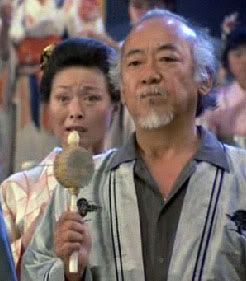 "Drum technique. Understand?" |
Quote:
Quote:
Here's the thread... You wrote: Relative to the object - the turning axis is the work involved to create the centripetal force - the string becomes taut - centrifugal force I wrote: Ok, and the centrifugal force acts on? You wrote what I quoted above beginning with "The right arm ...". So, let's take a step back to what you wrote: "the string becomes taut - centrifugal force" What does the centrifugal force act on? You are right that you can write responses in any form you choose. I reject your claimed sovereignty over what my duties are and where any onus lies unless of course it is part of the terms and conditions of this web site. |
Before this discussion deteriorates any further.
In response to my comment about centrifugal force Yoda wrote: Quote:
As a result, I explained the forces involved in the kid and the rock example Quote:
|
Change of Venue
To better serve the purposes of all concerned, I am moving this entire thread to The Lab. See you there! :3gears:
|
| All times are GMT -4. The time now is 11:32 AM. |